

Brewing
Coffee grind size: how fine to grind for each brewing method
Grind size matters as much as the beans. A guide to grind size for espresso, moka pot, drip, French press and cold brew, and how to tell if your grind is off.
By ทีมโปรดชง · Published · 4 min read
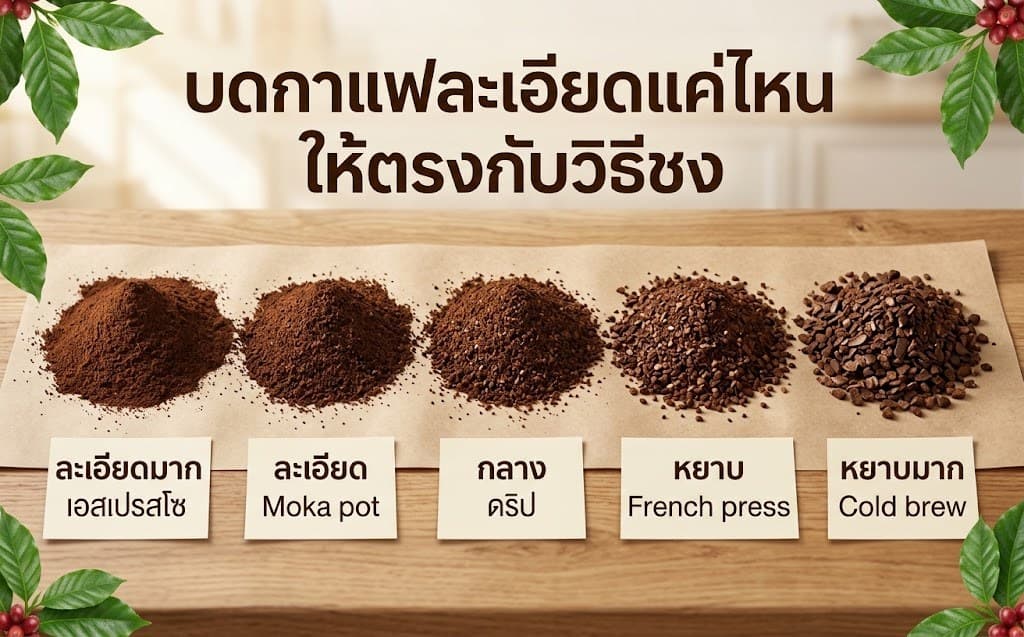
Grind size controls how much flavour the water pulls from the coffee. Fine grounds expose more surface and extract quickly; coarse grounds extract slowly. If the grind doesn't suit the brew method, the coffee ends up bitter or sour and thin, however good the beans are.
The simple rule
The shorter the contact time, the finer the grind; the longer, the coarser. Espresso takes under a minute, so it's ground very fine. Cold brew steeps for hours, so it's ground very coarse.
Grind size by method
- Extra fine (close to powder but still slightly gritty): espresso
- Fine (like table salt): moka pot
- Medium to medium-fine (like coarse sand): drip and pour-over
- Coarse (like sea salt flakes): French press
- Extra coarse (like cracked pepper): cold brew
Signs your grind is off
- Too fine: bitter and astringent, slow flow; drip stalls and espresso only drips.
- Too coarse: sour, thin and weak, fast flow; espresso gushes with thin crema.
- Adjust in small steps and taste side by side, since every grinder's scale is different.
Choosing a grinder
- Burr grinder: consistent particle size and adjustable, suits every method, especially espresso.
- Blade grinder: cheap but uneven, mixing powder and chunks, so flavour is hard to control.
- Hand grinder: affordable and usually burr-based, good for drip and moka pot at home.
Grind just before brewing
Ground coffee loses aroma far faster than whole beans, so grind only what you need each time. See how to store coffee beans.
Read more by method
Doi Chang coffee from PRODCHONG
PRODCHONG sells Doi Chang coffee as whole beans so you can grind fresh for your method, in medium and dark roast, in 250 g and 1 kg bags.