

Origin
Doi Chang: Thailand's highland Arabica growing area
Where Doi Chang is, why highland coffee tastes different, its path from opium to coffee, and how to choose a medium or dark roast.
By ทีมโปรดชง · Published · 4 min read
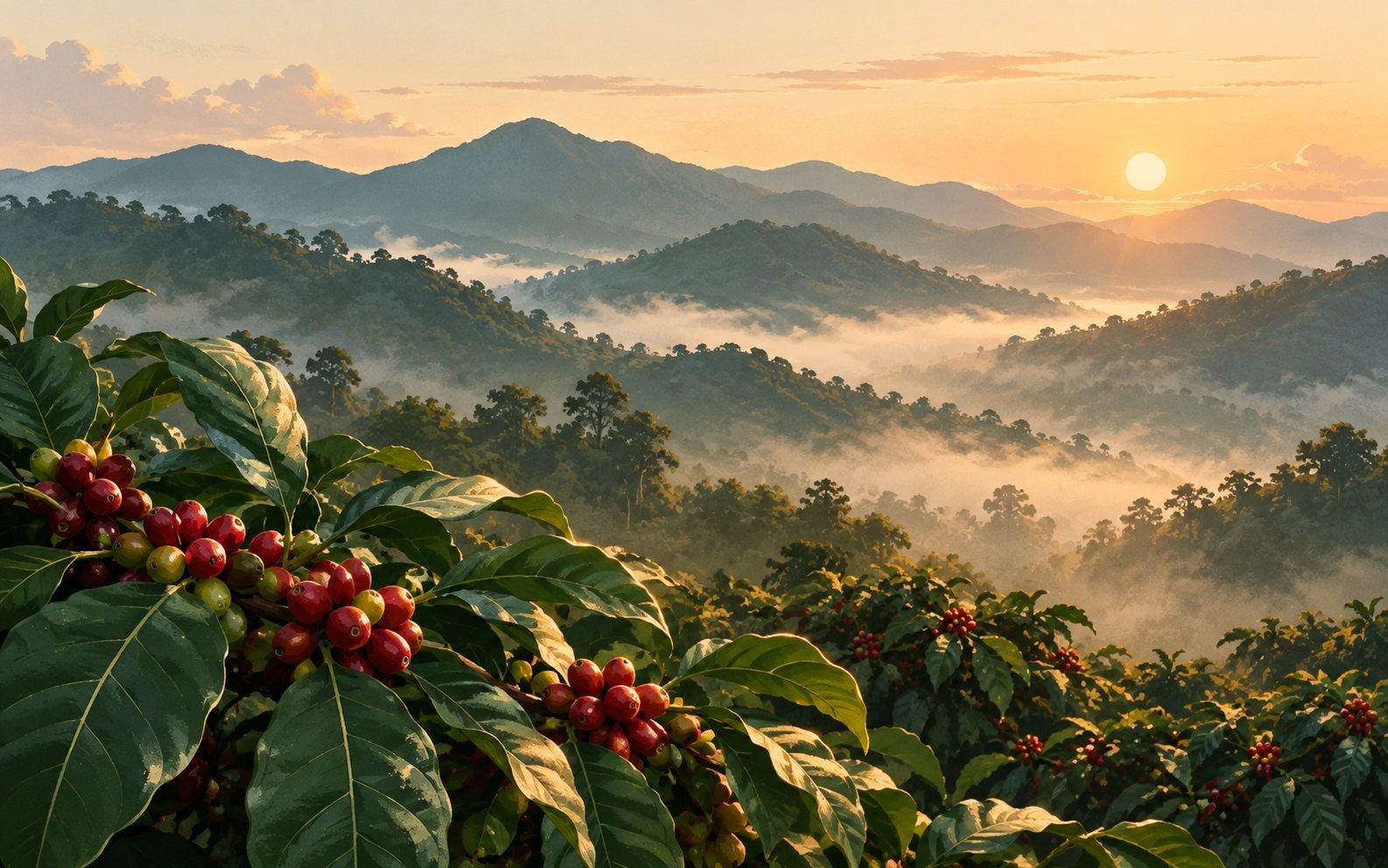
When you see “Doi Chang coffee beans” on a bag, the name tells you where the beans were grown. Doi Chang is one of Thailand's best-known highland Arabica growing areas. This article covers where it is, why altitude suits coffee, and how to pick a Doi Chang coffee for the way you brew.
Where is Doi Chang?
Doi Chang is a mountain area in northern Thailand. Most coffee farms sit above 1,000 metres, and some sources put the average elevation at around 1,200–1,300 metres. The average yearly temperature is about 24°C, with mist and cloud in the rainy season and cool weather from late rains into winter, conditions Arabica coffee likes.
The area is home to hill communities, notably the Akha and Lisu. Most coffee is grown on small family plots alongside fruit trees, other trees and vegetables.
From opium fields to coffee farms
Many highland areas in northern Thailand once grew opium and practised slash-and-burn farming, which cleared forest. Around 1969, a royal development project led by King Bhumibol Adulyadej (Rama IX) began encouraging highland farmers to replace opium and shifting cultivation with cash crops grown alongside trees.
At Doi Chang, Arabica coffee plants were reportedly introduced to farmers around 1983. Coffee gradually became the community's main livelihood, degraded land regained tree cover, and the Doi Chang name became known in Thailand and abroad as a coffee origin.
Why altitude suits Arabica
- Cooler air slows ripening, giving the beans more time to build sugars and flavour compounds.
- Highland beans tend to be denser, which generally means more complex flavour and brighter acidity than lowland coffee.
- Warm days and cool nights help the plants grow in balance.
- Rain and mist keep the soil moist while the trees flower and set fruit.
From coffee cherry to roast-ready bean
After harvest, ripe cherries are processed to separate the bean from the skin and fruit. Three methods are common in Thailand's coffee areas:
- Washed: the skin and mucilage are removed before drying, giving a clean cup with clear acidity.
- Natural: whole cherries are dried, bringing out sweetness and fruit notes.
- Honey: some mucilage is left on during drying, landing between the two.
The green beans are then sorted and stored before roasting. Roast level shapes the final cup as much as the origin does.
Medium or dark roast?
- Medium roast: balanced acidity and sweetness, medium body. Good for drip, French press and moka pot.
- Dark roast: bold and roasty with chocolate tones and a full body. Good for espresso, iced coffee and milk drinks.
For more, read how to choose a roast level for your brew method.
Doi Chang coffee from PRODCHONG
PRODCHONG selects beans from the Doi Chang growing area in three coffees: Original and Dark (100% Arabica) and Espresso (an Arabica and Robusta blend). Each comes in medium or dark roast, in 250 g and 1 kg bags. See them all on the Doi Chang coffee page, or ask about wholesale prices for your café.
FAQ
What coffee grows on Doi Chang? Arabica, which needs cool weather and high altitude.
What does Doi Chang coffee taste like? It depends on the plot, processing and roast. Medium roasts are generally balanced with some acidity and sweetness; dark roasts are bold and bitter-sweet.
Is PRODCHONG related to the Doi Chaang brand? No. PRODCHONG uses “Doi Chang” only to describe where the beans come from. PRODCHONG does not own and does not represent any brand that uses the Doi Chang or Doi Chaang name.